
How Singapore’s green building standard works, what version 7 changes, and how building products earn their place in a Green Mark project.
Green building By Smartcity Projects · Singapore · 12 October 2026 · 5 min read
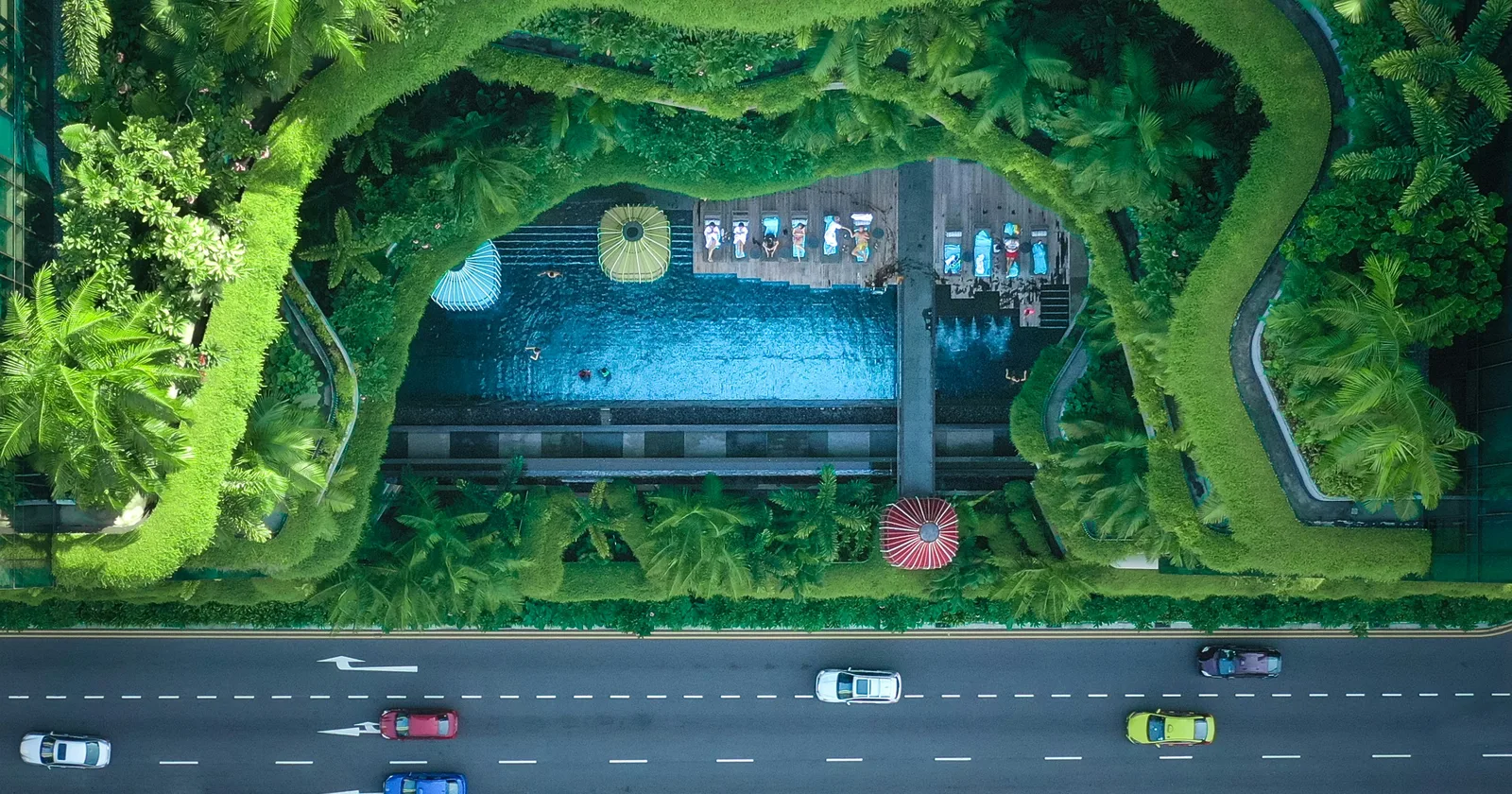
In Singapore, a green building is not a slogan on a brochure. It is a score, checked by the Building and Construction Authority (BCA), and it decides how a project is designed, which systems go in and which materials make it onto the specification.
That score is Green Mark. In this article we explain where it comes from, how it works and why it matters to anyone who supplies products to Singapore’s construction sector.
The 80-80-80 target behind every project
Green Mark is the tool behind the Singapore Green Building Masterplan, which sets three national targets for 2030:
| Target for 2030 | Progress (BCA, 2026) |
|---|---|
| 80% of buildings, by gross floor area, certified green | 66% |
| 80% of new developments built to Super Low Energy standard | 33% |
| 80% improvement in energy efficiency for best-in-class buildings, compared with 2005 | 72% |
Two thirds of Singapore’s built floor area is already green, and the goal is four fifths by 2030. The gap on new Super Low Energy buildings is wider, which means the bar for new projects will keep rising. You can read more about the bigger picture in Smart cities: the Singapore model.
How Green Mark rates a building
Under the current scheme, Green Mark 2021, buildings are rated according to how much energy they save and how they perform on wider environmental criteria:
| Rating | Energy performance |
|---|---|
| GoldPLUS | More than 50% energy savings |
| Platinum | More than 55% energy savings |
| Super Low Energy (SLE) | At least 60% energy savings |
| Zero Energy (ZE) | 100% of energy demand offset by renewables |
| Positive Energy (PE) | At least 115% of energy demand generated on site |
On 2 September 2026, BCA launched Green Mark version 7. The main changes:
- A new pathway focused only on energy performance, designed to make it easier to certify existing buildings.
- A new SLE70 level for buildings that save at least 70% energy.
- An updated framework for whole life carbon: the carbon of the building over its entire life cycle, materials included.
- Recognition of alternative cooling technologies and certification of portfolios of similar buildings.
- Validity of up to five years, instead of three, for buildings that keep their energy targets.
Green Mark 2021 remains valid during the transition: new applications will be accepted until 1 April 2027, and ongoing projects must be completed by 31 December 2027.
Where building materials earn their place
Green Mark certifies buildings. Products have their own label: Singapore Green Building Product (SGBP), run by the Singapore Green Building Council (SGBC).
SGBP rates products from one to four ticks, four being the highest. Certified products can contribute to a building’s Green Mark score, and a higher rating earns more recognition. How many points a product actually brings depends on the criterion it falls under, the type of building and the documentation provided. There is no fixed number of points per tick.
Depending on the product family, SGBP looks at emissions, resource efficiency, performance, composition and, more and more, embodied carbon. And the criteria are not static: in 2025 and 2026 alone, SGBC has revised the requirements for ready-mixed and precast concrete, paints, steel, cables, LED lighting, solar panels, lifts and escalators.
The architect or Green Mark consultant checks the SGBC directory. If a product is not there, it is much harder to specify.
What it means for European manufacturers
Many European manufacturers already have what Green Mark rewards: environmental product declarations, recycled content, low-emission formulations, data on embodied carbon. With version 7 putting more weight on whole life carbon, that is a real head start.
But a European label does not count on its own. Getting a product into the SGBC directory takes independent testing, a technical review and documentation in the format local consultants expect.
The difference is usually in the details: knowing which criterion a product contributes to, presenting the evidence in the format local consultants expect, and keeping up as the criteria change. That groundwork is what turns a good European product into one that gets specified in Singapore.
In short
Green Mark is how Singapore turns its climate targets into buildings. For product manufacturers, it is also a door: those who understand it, and who are in the directory when the specification is written, are the ones who end up on site.



Leave A Comment