
Singapore is back in first place in the IMD World Competitiveness Ranking. What drove it, what slipped, and what it means for companies looking at Asia.
Market entry By Smartcity Projects · Singapore · 13 October 2026 · 4 min read
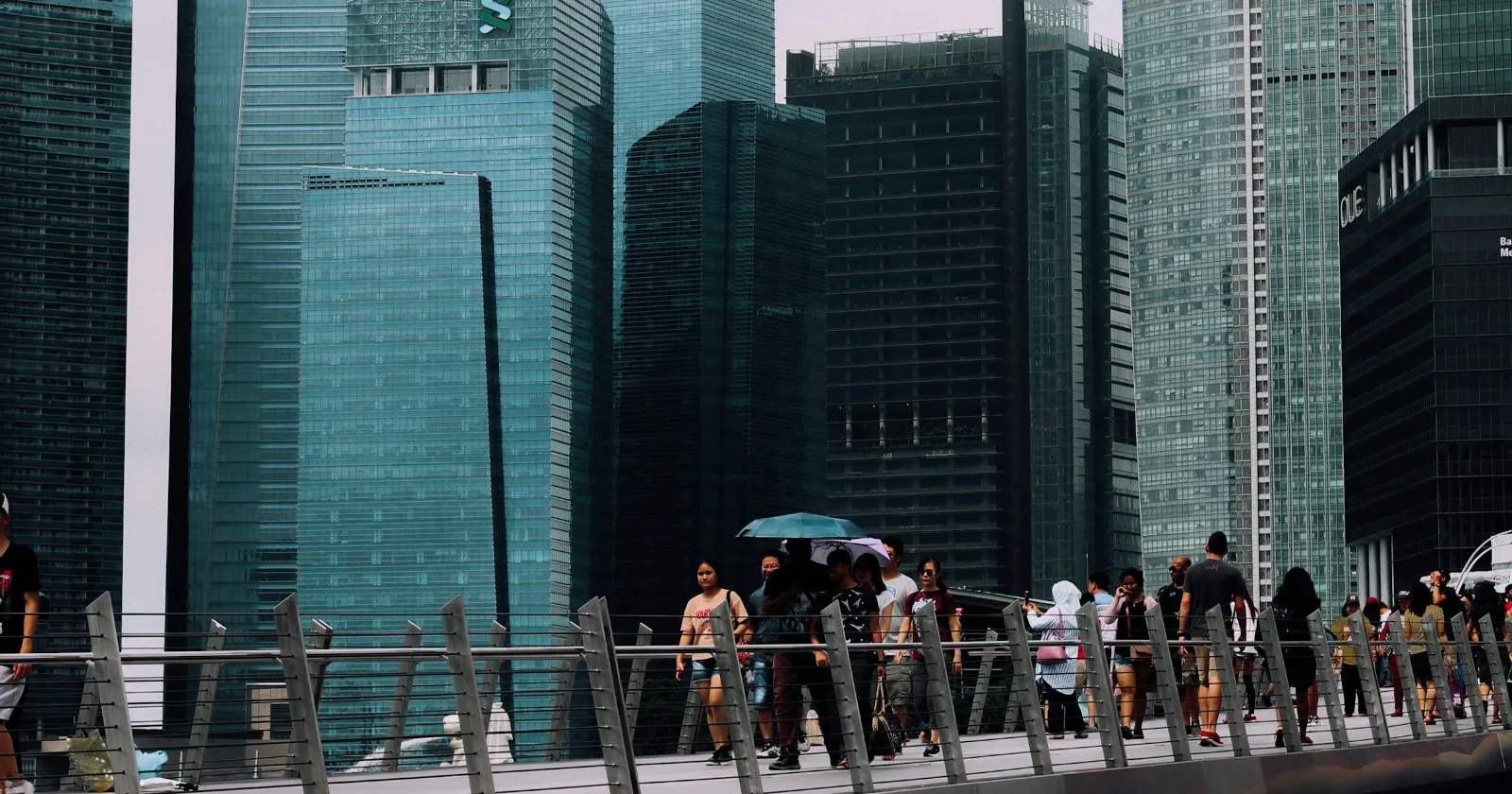
On 18 June 2026, IMD published its annual World Competitiveness Ranking, and Singapore is back at the top of the 70 economies it measures. It had slipped to second place in 2025, behind Switzerland, after leading the table in 2024.
What the ranking measures
IMD combines 172 statistical indicators with 92 survey questions. The results are grouped into four factors: economic performance, government efficiency, business efficiency and infrastructure. Part of the score therefore comes from hard data and part from what senior executives say about doing business in each economy.
What pushed Singapore back to first
The decisive factor was business efficiency, where Singapore jumped seven places to reach first globally. The other factors moved less:
- Government efficiency: unchanged, in third place.
- Infrastructure: up one place, to fifth.
- Economic performance: down two places, to third.
In other words, the return to the top owes more to one factor than to a general improvement. IMD summed it up by saying Singapore’s rise “highlights how quickly agile economies can regain momentum”.
A different kind of competitiveness
IMD’s wider message this year is that competitiveness is no longer mainly about cost, scale or even innovation. It is about institutional credibility: predictable rules, enforceable commitments and a state that can deliver. The more fragmented the global economy becomes, the more those qualities count.
The rest of the top five reflects the same shift. Hong Kong rose to second, Switzerland fell to third after a sharp drop in direct investment flows, Taiwan advanced two places to fourth and the United Arab Emirates held fifth. For the European economies in the top ten, IMD describes a gradual slippage, with high costs and fiscal burdens weighing on countries such as Denmark and Sweden.
What it means for foreign companies
This is our reading, not IMD’s. For a company weighing Asia, a stable and credible institutional environment is a real advantage: contracts are honoured, rules are clear and decisions are predictable. That is part of why Singapore is so often chosen as a first base in the region.
But a ranking measures an economy, not the difficulty of a specific market entry. Topping the table does not make it easier to find the right distributor, understand how public buyers decide or time a launch.
First place is a snapshot: Singapore was first in 2024, second in 2025 and first again in 2026. The useful question for a company is not who is first, but what this economy does well, and whether that matches what its product needs.
Sources: Singapore Economic Development Board, “Singapore reclaims top spot in IMD World Competitiveness Ranking as business efficiency improves” and “Economies with strong institutions lead the 2026 IMD World Competitiveness Ranking” (18 June 2026).








Leave A Comment